If you need water analysis for lead in CT, professional testing can determine whether lead is present in drinking water and provide reliable documentation for homes, schools, daycares, preschools, foster care placements, adoption requirements and group homes. Lead is a toxic metal that can enter drinking water through plumbing materials, service lines, fixtures and solder used in older water systems. Because lead usually cannot be seen, tasted or smelled, a professional water analysis in Connecticut is the most dependable way to determine whether lead is present in a water supply.
Lead testing is especially important in buildings where children live, learn or receive care. Young children are more vulnerable to the effects of lead exposure; therefore, schools, child care facilities, preschools, foster homes, group homes and families completing adoption-related evaluations may need accurate laboratory results for health, licensing, placement or agency documentation. Whether the water comes from a private well or a public water supply, lead can enter drinking water after it leaves the source and comes into contact with plumbing components containing lead.
Lead Water Testing for Schools, Daycares and Child Care Facilities
Schools, licensed daycares, preschools and other child care facilities may request lead water testing in Connecticut to evaluate drinking fountains, classroom sinks, kitchen fixtures and other water outlets used by children and staff. Since lead contamination often develops within the plumbing system, water from one fixture may test differently from water collected elsewhere in the same building.
For this reason, the number and location of samples can depend on the purpose of the testing and the layout of the property. Lead analysis of the water can provide clear results that help facility owners, administrators and property managers determine whether additional evaluation or corrective action is necessary.
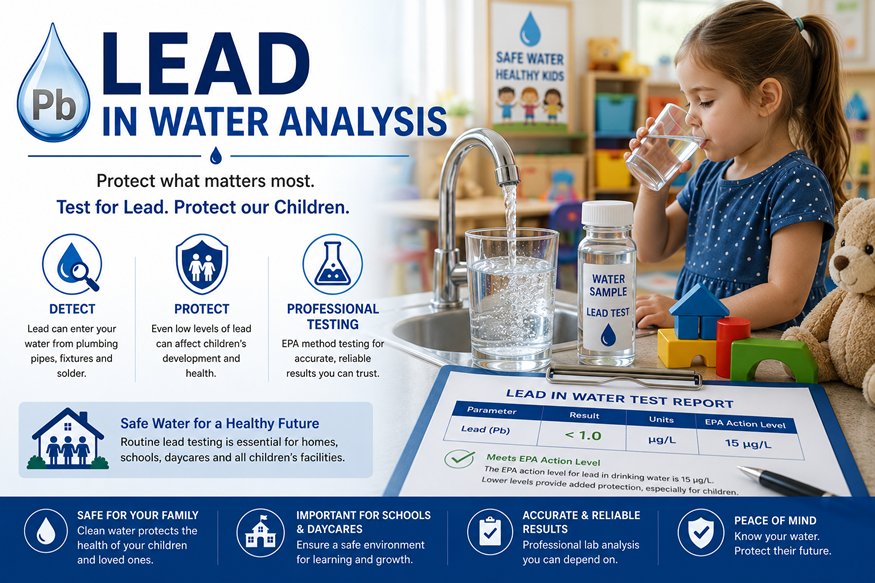
Lead Water Testing for Foster Care, Adoptions and Group Homes
Families, agencies and property owners may also need water analysis for lead in CT as part of a foster care placement, adoption process, group home evaluation or residential licensing requirement. In these situations, professional laboratory results can help document the quality of the drinking water at the property.
Testing may be requested for a private residence, foster home, shared living facility, group home or other property where children or vulnerable individuals will live. Depending on the agency or program involved, additional water quality parameters may also be requested. Therefore, it is helpful to review any paperwork or testing instructions before scheduling sample collection.
What Causes Lead in Drinking Water?
Unlike some contaminants that occur naturally in groundwater, lead is most commonly introduced through plumbing materials. Older homes, schools and commercial buildings may contain lead service lines, lead-containing solder, brass fixtures or plumbing components that can contribute lead to drinking water over time.
When water is corrosive or remains stagnant in plumbing for extended periods, small amounts of lead may dissolve into the water. As a result, lead contamination is often associated with the plumbing system rather than the well or original water source itself.
Common sources identified during a water analysis for lead in Connecticut may include:
- Lead service lines
- Older plumbing systems
- Lead-containing solder used in plumbing connections
- Brass faucets and plumbing fixtures containing lead components
- Corrosion of older water distribution systems
- Stagnant water sitting in pipes for extended periods
- Corrosive water chemistry that increases metal leaching
Because lead contamination often originates within the plumbing system, two properties supplied by the same water source may have very different lead levels. Likewise, two fixtures inside the same school, daycare or residence may produce different results. This is why property-specific and fixture-specific testing may be important.
Why Certified Professional Lead Water Analysis Is Important
A professional lead water analysis provides accurate certified data regarding the concentration of lead in drinking water. Since lead cannot usually be detected through appearance, taste or odor, testing is the only dependable method for determining whether a water supply contains elevated lead levels.
Lead testing may be especially important for:
- Licensed daycares and child care centers
- Preschools and nursery schools
- Public and private schools
- Foster homes and foster care placements
- Adoption-related home evaluations
- Group homes and shared living facilities
- Homes with infants or young children
- Properties with older plumbing systems
- Rental properties and residential facilities
- Buildings undergoing licensing or agency review
In addition, many Connecticut property owners request a water analysis for lead in CT when purchasing an older property, replacing plumbing, evaluating drinking water quality or responding to a facility, lender, licensing or agency request.
Lead, Older Plumbing and Connecticut Buildings
Many older homes, schools and facilities throughout Connecticut were constructed using plumbing materials that may contain lead or lead-bearing components. Although not every older property will have elevated lead levels, the age of the building and plumbing system are often considered when deciding whether a water analysis in Connecticut should include lead testing.
Properties with older service lines, original plumbing systems or aging fixtures may benefit from lead testing as part of an overall water quality evaluation. Furthermore, certain water chemistry conditions may accelerate corrosion and increase the likelihood that lead will enter drinking water.
Because lead levels can vary depending on how long water has remained in contact with plumbing materials, sample collection procedures may be important. Depending on the purpose of the test, lead samples may need to be collected under specific conditions. Any instructions supplied by a school, child care licensing agency, foster care agency, adoption agency or other organization should be followed carefully.
If elevated lead concentrations are identified during a water analysis for lead in Connecticut, corrective measures may include fixture replacement, plumbing upgrades, flushing procedures, corrosion control measures or water treatment solutions. The most appropriate response depends on the source of the lead, the sample location and the overall water chemistry.
We provide professional water analysis for lead in CT for schools, daycares, preschools, foster homes, adoption-related evaluations, group homes, residential facilities, homeowners and property managers throughout Connecticut. Whether you need certified testing for documentation, licensing, placement, facility review or peace of mind, professional water analysis in CT can provide accurate results and useful information about potential lead contamination.
Call today to schedule lead water testing for your Connecticut property or facility!
888-558-1574