If you need water analysis for bacteria in Connecticut, understanding the difference between coliform bacteria and E. coli bacteria is important. Bacteria water analysis is one of the most common reasons property owners order water testing in CT. Whether you own a private well, are buying a home, operate a child care facility, manage a commercial property, or simply want to verify the quality of your drinking water, professional water analysis in Connecticut can help determine whether harmful bacteria may be present.
When a laboratory performs a bacteria water analysis, the sample is typically analyzed for both total coliform bacteria and E. coli bacteria. Although the terms are often used together, they are not the same thing. Understanding the difference can help Connecticut property owners better interpret their water analysis results and determine the appropriate corrective action.
Understanding Coliform and E. coli Bacteria in Water Analysis
Coliform bacteria are a broad group of bacteria commonly found throughout the environment. They may be present in soil, vegetation, surface water, decaying organic matter and the digestive systems of humans and animals. Because coliform bacteria are widespread in nature, they are used during water analysis as indicator organisms. Their presence suggests that bacteria have entered the water supply and that conditions may exist that allow other contaminants to enter as well.
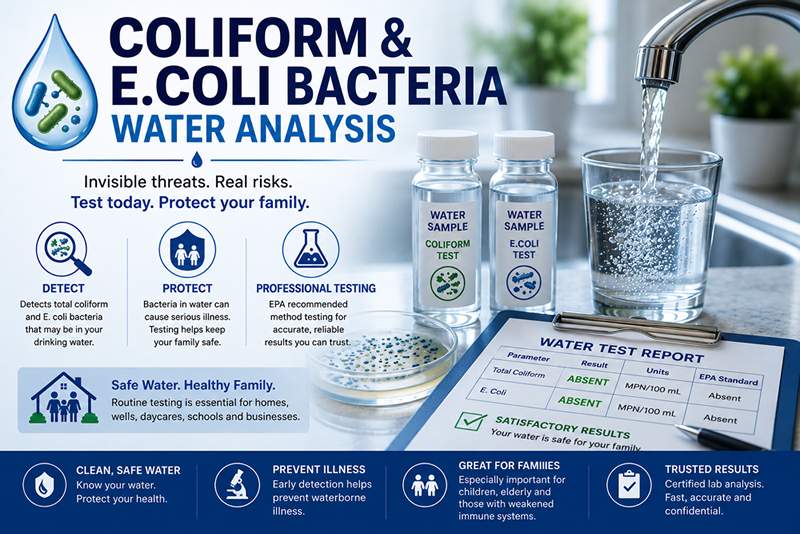
E. coli is a type of coliform bacteria. In other words, every E. coli bacterium is a coliform, but not every coliform bacterium is E. coli. E. coli is more specifically associated with the intestinal tracts of humans and warm-blooded animals. For this reason, the presence of E. coli during a water analysis in CT is generally considered stronger evidence of possible fecal contamination.
A water analysis result showing total coliform bacteria may indicate environmental contamination, a plumbing issue, improper sampling procedures, a damaged well component, or another pathway through which bacteria entered the system. A water analysis result showing E. coli bacteria is generally viewed as more serious because it may indicate contamination from sewage, septic systems, animal waste or other fecal sources.
Whether a Connecticut water analysis identifies coliform bacteria, E. coli bacteria or both, the water should not be considered potable until the cause has been investigated and acceptable follow-up water analysis results have been obtained.
Why Coliform and E. coli Bacteria Make Water Non-Potable
Potable water is water that is considered safe for drinking, cooking, preparing food, brushing teeth and other household uses involving possible ingestion. When a bacteria water analysis detects coliform bacteria or E. coli bacteria, the water does not meet accepted bacteriological drinking water standards.
Even though not all coliform bacteria cause illness, their presence indicates that contamination has occurred somewhere within the well, plumbing system or water source. Because bacteria can enter through the same pathways used by other microorganisms, a positive coliform result raises concerns about overall water quality.
E. coli bacteria are of even greater concern because they are associated with fecal contamination. Certain strains of E. coli can cause gastrointestinal illness and other health problems. For this reason, a positive E. coli result from a water analysis in Connecticut should always be addressed promptly.
Until corrective action has been completed and follow-up water analysis confirms acceptable results, the water should not be used for drinking, cooking, making ice, washing fruits and vegetables, preparing infant formula or brushing teeth.
Common Causes of Bacteria in Connecticut Well Water
A bacteria water analysis may detect coliform bacteria or E. coli bacteria for a variety of reasons. Common causes identified during water analysis investigations in Connecticut include:
- Damaged or improperly sealed well casings
- Loose, missing or defective well caps
- Surface water entering the well during storms
- Heavy rainfall, flooding or snowmelt conditions
- Failing septic systems or leaching fields
- Animal waste from livestock, wildlife or domestic animals
- Shallow wells vulnerable to surface contamination
- Recent well drilling, pump replacement or plumbing repairs
- Contaminated treatment equipment or water softeners
- Contaminated faucet aerators or plumbing fixtures
- Groundwater pathways carrying bacteria into the water supply
In many cases, the source of bacteria can be identified through a combination of site evaluation, well inspection and additional water analysis. Corrective measures may include repairs, disinfection, shock chlorination, drainage improvements, septic system repairs or replacement of damaged well components.
Following corrective action, a new bacteria water analysis in CT should be performed to verify that coliform bacteria and E. coli bacteria are no longer present. Water should not be considered potable until satisfactory laboratory results have been received.
We provide professional water analysis for bacteria in Connecticut, including analysis for coliform bacteria, E. coli bacteria and other water quality concerns. Whether you are purchasing a home, evaluating a private well, meeting lending requirements or simply monitoring your water quality, professional water analysis in CT can help ensure that your drinking water meets appropriate bacteriological standards.
Call today to schedule your Connecticut water analysis for bacteria!
888-558-1574